Imagine standing by the oven door on a wet Tuesday evening. You pull out a tray of carrots and parsnips, hoping for those sticky, blackened edges that make winter dining worthwhile. Instead, you are met with pale, shrivelled wedges that taste vaguely of warm water and regret. We have all accepted this as the standard midweek compromise, sacrificing depth of flavour because we simply do not have the hours required to coax out the natural sugars.
To achieve proper, deep-roasted sweetness, the kind that usually requires an afternoon of slow braising and basting, you assume you need time. Time is the one ingredient missing from the modern kitchen. But the secret to that slow-cooked depth is sitting in the darkest corner of your cupboard, entirely ignored.
It is a dark, viscous paste, famously polarising at the breakfast table. Yet, when pulled away from toasted sourdough and introduced to high heat, it stops being a spread and becomes a culinary accelerant. This is not about making your dinner taste like breakfast; it is about exploiting a very specific chemical reaction.
The Umami Engine: Rethinking the Dark Jar
You likely view Marmite as a binary choice—loved or hated, confined exclusively to buttered bread. This limitation ignores the chemistry of yeast extract. It is densely packed with glutamates, the exact compounds responsible for the rich, savoury weight of long-simmered beef stock or aged Parmesan.
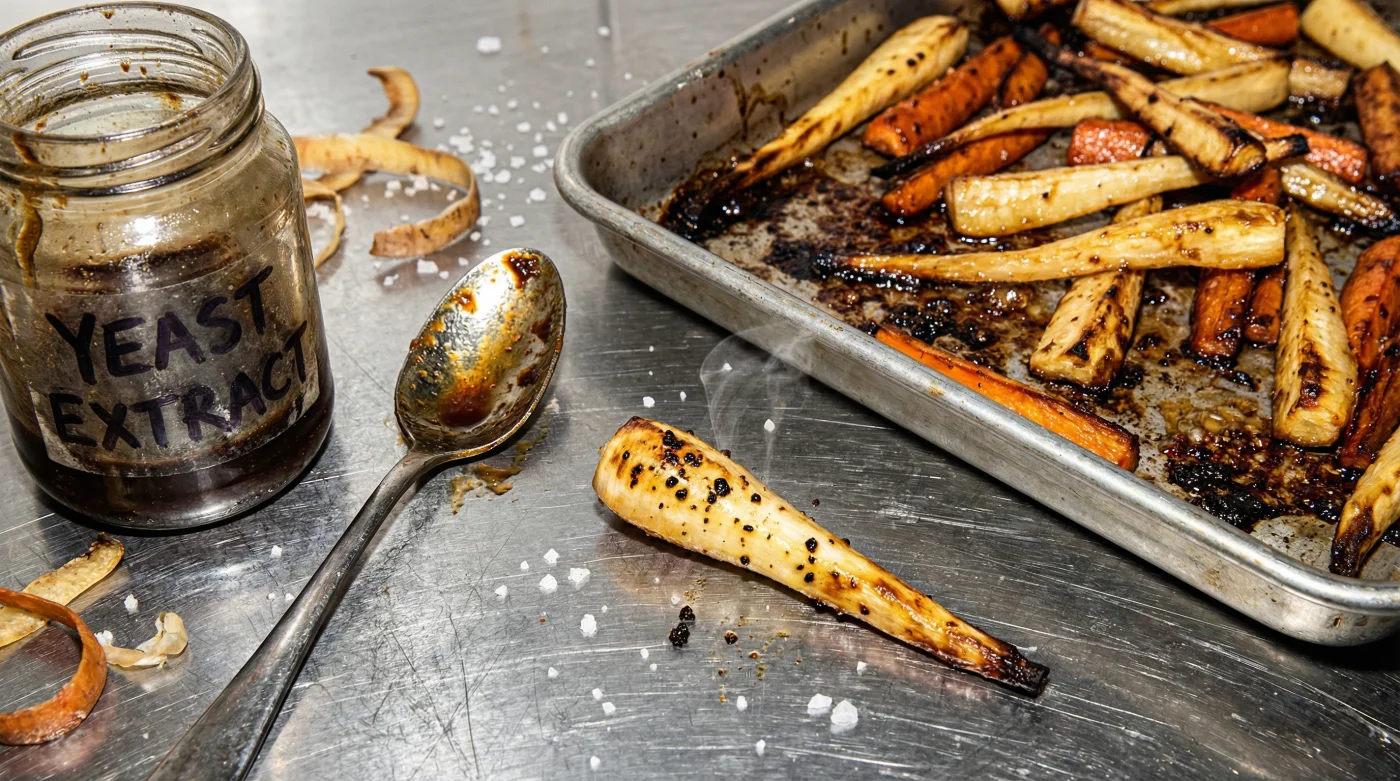
When these compounds hit a hot roasting tin, they caramelise almost instantaneously. Instead of waiting an hour for the natural sugars in a parsnip to break down and brown, the yeast extract forces a Maillard reaction in minutes. It creates a sticky, umami-rich glaze that mimics the depth of a traditional slow roast, tricking the palate into registering hours of careful attention.
Thomas, a 42-year-old head chef at a rural North Yorkshire gastropub, relies on this rapid flavour development technique during frantic Sunday services. Facing a sudden shortage of veal stock one weekend, he whisked a teaspoon of yeast extract into his roasting fats. The resulting root vegetables, glossy and intensely savoury, sold out before the beef did. It was a revelation born from necessity.
You do not need professional equipment or years of classical training to replicate Thomas’s logic. You merely need a slight perspective shift regarding how you handle the staples you already own.
Tailoring the Roast: Applications for Every Kitchen
If you are preparing a full weekend roast, target the robust root vegetables. Parsnips, carrots, and swede can handle a heavier glaze. Whisk your yeast extract with melted beef dripping or goose fat before tossing. The edges will catch and blister under the heat, forming a crust that commands immediate attention on the dining table.
For the rushed home cook, a slightly different approach works wonders on softer, midweek vegetables. Diced sweet potatoes and butternut squash require less time in the oven and carry more moisture. Combine a tiny dab of the dark paste with olive oil and a splash of hot water to thin it out. This ensures an even, golden coating without overwhelming the delicate flesh.
Perhaps you genuinely detest the flavour of the spread. In this context, you must treat it like an ambiguous, mouth-watering savoury note rather than a primary ingredient. Just as anchovies melt into a rich tomato sauce without tasting of fish, a half-teaspoon of yeast extract disappears into the background of a roasting tray, leaving behind nothing but pure, unidentifiable depth.
The Tactical Toolkit: A Mindful Method
To execute this properly, you must respect the cooking temperatures and the physical properties of the paste. Because it is rich in natural sugars and proteins, it can shift quickly from beautifully caramelised to sharply bitter if left unattended. Follow this deliberate sequence to protect your ingredients.
- The Emulsion: Never apply the paste directly to raw vegetables. Whisk one teaspoon of Marmite with three tablespoons of hot oil or melted butter until completely dissolved into a cloudy liquid.
- The Temperature: Preheat your oven to 200°C (180°C Fan/Gas Mark 6). This heat is high enough to trigger the chemical browning, but gentle enough to prevent sudden charring.
- The Spacing: Ensure your vegetables have room to breathe on the tray. If they are crowded, they will sit sweating in the pan, steaming in their own juices rather than roasting.
- The Turn: Check the tray after twenty minutes. The bottoms should be gripping the metal with a sticky lacquer. Turn them gently with a spatula to coat the other side.
Keep a close eye during the final ten minutes. The line between a perfectly blistered edge and an acrid, burnt tip is remarkably fine when dealing with concentrated umami glazes.
Seeing the Pantry with Fresh Eyes
Mastering this small adjustment does more than salvage a bland midweek dinner. It forces you to reconsider the hidden potential within your own cupboards. We often categorise our ingredients by their most common use, ignoring the scientific properties that make them immensely valuable in entirely different contexts.
By breaking that mental barrier, you gain a quiet culinary confidence. You stop relying on expensive, ready-made glazes or hours of exhausting preparation. You begin to cook with intuition, using what you already have to coax out flavours that taste incredibly sophisticated.
The next time you face a pile of uninspiring winter roots, leave the slow cooker in the cupboard. Reach for the little black jar instead, and let the heat do the hard work for you.
True flavour rarely requires more time; it simply requires you to understand the ingredients you already possess.
| Key Component | Application Detail | Added Value for the Reader |
|---|---|---|
| Emulsion Base | Whisking yeast paste with hot oil or fat before coating. | Prevents patchy, bitter spots and ensures an even glaze. |
| Oven Heat | Roasting at exactly 200°C (180°C Fan). | Triggers a rapid Maillard reaction without burning the sugars. |
| Sceptic’s Measure | Using exactly half a teaspoon per large tray. | Delivers profound savoury depth with zero trace of breakfast spread flavour. |
Can I use a reduced-salt version?
Yes, though you may need a tiny pinch of flaky sea salt before serving to balance the natural sweetness of the roasted roots.Will this make my roasting tin impossible to clean?
The sugars do adhere strongly. Line your tray with high-quality baking parchment to save yourself the misery of midnight scrubbing.Does this technique work on green vegetables?
It is slightly too aggressive for delicate leaves, but it works beautifully on robust winter brassicas like Brussels sprouts.Can I prepare the glaze ahead of time?
It will separate as the oil cools and rests. Always whisk it together vigorously just moments before tossing your vegetables.What if I accidentally add too much paste?
If the flavour becomes overwhelming, a sharp squeeze of fresh lemon juice across the hot tray will instantly cut through the intensity.