You walk into the kitchen on a crisp Tuesday morning, craving the simple comfort of hot butter melting into thick sourdough. You pick up the paper bag left on the worktop, but your fingers meet unyielding resistance. The beautiful, blistered cob you bought from the local bakery on Saturday has turned into an absolute rock.
Fighting the crust feels futile, as your serrated knife skitters off the surface, threatening a trip to A&E rather than yielding a slice for the toaster. The immediate instinct is a frustrated sigh and a quick toss into the food waste bin, or perhaps a begrudging acceptance that you will be eating croutons for the next three days.
We have collectively accepted a tragic culinary myth: that once bread loses its spring, its life as a fresh, tearing loaf is over. You assume the moisture has entirely evaporated, leaving behind a hollowed-out shell that belongs only in the realm of breadcrumbs or the compost heap.
But what if the moisture is merely sleeping, trapped within a rigid structure rather than lost to the kitchen air? The reality of artisan bread is far more forgiving than the harsh crust suggests, requiring only a slight shock to the physical system to return to its original glory.
The Hydration Illusion
To understand why your loaf feels like a brick, you need to picture a complex architectural structure shutting its doors. Staling is not strictly about drying out; it is a chemical process called starch retrogradation. The water molecules have migrated from the fluffy crumb to the crust, leaving the interior crystallised and firmly locked in place.
Think of it like glass, turning rigid and sharp when cold, yet willing to become entirely fluid when introduced to the right heat. Your stale bread is holding its breath, clinging to the last remnants of hydration in a state of suspended animation, waiting for an intervention.
You do not need to accept defeat or settle for another bowl of panzanella just to clear out the pantry. By applying a specific, zero-waste provisioning tactic, you can force the moisture back into the crumb where it belongs. Submerging your loaf under the kitchen tap feels deeply wrong, yet it remains the master key to resetting the starch vault.
Trusting the cold tap requires a temporary suspension of logic, asking you to intentionally drench a dry good to achieve a crispy, freshly baked outcome.
A Cornish Baker’s Secret
I first witnessed this counter-intuitive revival in a damp, salt-sprayed kitchen in Cornwall. Elias Thorne, a 58-year-old baker who treated his flour with the reverence of a monk, was preparing a late lunch. He picked up a solid, three-day-old rye sourdough that clattered loudly when he tapped it against the heavy wooden counter. Instead of reaching for a bread saw, he turned toward the sink.
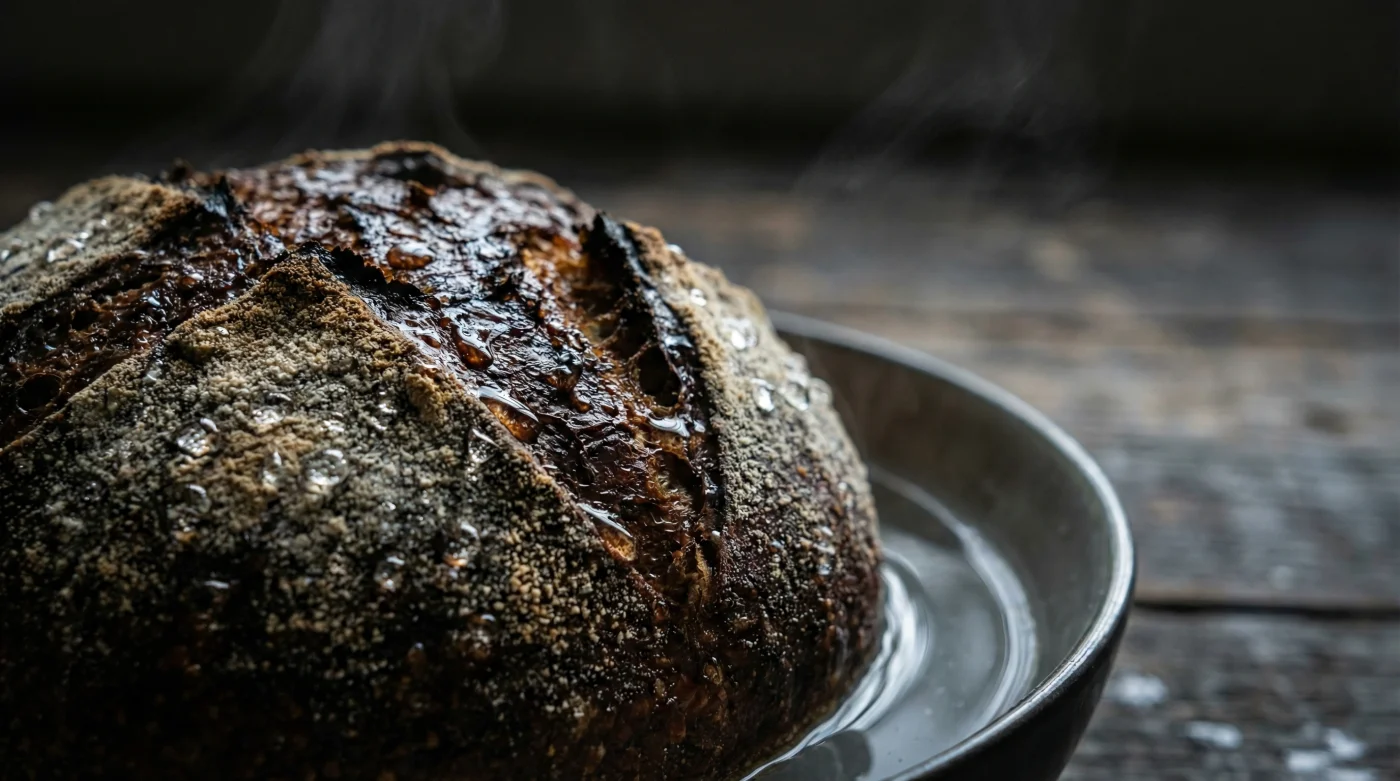
He ran it under cold water, thoroughly soaking the crust until it dripped heavily onto the stone floor, utterly violating everything I thought I knew about preserving baked goods. He threw the sodden mass directly into a blistering oven, and twelve minutes later, pulled out a steaming loaf that crackled and sang as if it had just been pulled from the morning bake.
Tailoring the Revival for Your Pantry
This strategic approach alters how you manage your weekly provisions entirely. You no longer need to panic-eat half a loaf on Sunday evening just to avoid the financial sting of wasting a £5 artisanal bake.
For the weekend purist, this means you can confidently buy the larger, more economical loaf. When Tuesday arrives and the heel feels stiff, you apply the water technique to the entire unsliced portion. The steam generated inside the oven re-gelatinises the starches perfectly, keeping the crumb intact.
For the busy weekday planner who pre-slices their bread for morning convenience, the approach shifts slightly. Slices dry out much faster, exposing the delicate crumb directly to the circulating air in your bread bin.
Run a wet hand over the crust edges rather than soaking the cut faces, then stack them briefly together in a warm oven. You are effectively steaming the interior while crisping the outside rims, saving your breakfast routine from crumbling into dry dust.
For the truly forgetful baker who has abandoned a forgotten heel in the back of the cupboard for a week, the bread requires a longer bath. Letting the petrified remnant sit in a bowl of water for a full thirty seconds ensures the moisture penetrates deeply enough to salvage the final slices.
Patience yields perfect toast, transforming what looked like a museum exhibit back into a warm, butter-absorbing sponge ready for your morning marmalade.
Mindful Application: The Water-Dipping Technique
The execution is brief, but the details matter. You must act decisively, ensuring the crust is saturated without turning the interior crumb to mush.
Here is your tactical toolkit for bringing any petrified loaf back from the brink, guaranteeing a crackling crust and a steaming centre.
- Heat the environment: Preheat your oven to 160°C (Fan) or 180°C (Conventional). A steady, moderate heat is vital to create steam without burning the wet exterior.
- The submersion: Take the whole or partial loaf to the kitchen sink. Turn the cold tap on to a medium flow.
- The drenching: Pass the bread rapidly under the stream. Ensure the bottom and top crusts are visibly wet, but do not let water pool heavily against the exposed cut end.
- The bake: Place the dripping loaf directly onto the middle oven rack. Do not use a baking sheet, as you want the air to circulate freely around the damp base.
- The observation: Wait 6 to 12 minutes, depending on the size of the loaf. The water on the crust turns to steam, forcing its way inward to soften the crumb, while the exterior dries back into a robust crust.
When you pull it out, the bread should give slightly under the pressure of your thumb. The crust will be singing—a faint, high-pitched crackling sound that tells you the internal structure has successfully reset.
Wait ten agonising minutes before cutting into it. The internal steam needs this brief resting period to settle, otherwise, the bread will breathe out too much moisture and tear gummy clumps when the knife finally slides through.
Reclaiming the Loaf and the Budget
Mastering this simple physical reset shifts your relationship with your pantry. The anxiety of fresh produce ticking down on an invisible timer begins to fade, replaced by a quiet confidence.
You reclaim control over waste, transforming what would have been a begrudging addition to the compost heap back into a luxurious meal. It fundamentally changes how you provision your household, allowing you to invest in proper, slow-fermented bread without the fear of it spoiling before Thursday.
It turns a mundane morning frustration into a quiet, highly satisfying victory. You are no longer racing against the staling process; you simply know how to rewind the clock when necessary.
Every slice feels intentional, a reward for understanding the natural behaviour of flour, water, and heat, ensuring nothing of value is ever prematurely discarded.
“Stale bread isn’t dead bread; it is simply bread that has locked its doors and is waiting for you to hand it the right key.”
| Key Point | Detail | Added Value for the Reader |
|---|---|---|
| The Core Myth | Staling is starch crystallisation, not purely moisture loss. | Removes the guilt of “letting bread dry out” and offers a scientific route to fix it. |
| The Water Dip | Running the crust under a cold tap before baking. | Saves you £5 per loaf by eliminating unnecessary food waste. |
| The Heat Reset | Baking at 160°C (Fan) for 6-12 minutes. | Provides a fast, 15-minute weekday morning solution for fresh bakery-style toast. |
Frequently Asked Questions
Does this work on supermarket sliced bread?
No. Commercially produced, plastic-wrapped sliced bread lacks the robust crust required to trap the steam; it will simply turn into a soggy mess. This is strictly for crusty artisan loaves.What if the bread has started to go mouldy?
If you see mould, the bread must go in the bin. The water trick only reverses starch retrogradation, it cannot cure bacterial or fungal growth.Can I do this more than once to the same loaf?
Ideally, no. The starch structure weakens with each dramatic temperature shock. Revive only the portion you intend to eat that day.Should I wrap the bread in foil before baking?
Foil will steam the bread, making it soft, but it prevents the crust from drying out and crisping up. For a true bakery crunch, bake it bare on the oven rack.How wet should the crust actually be?
It should be glistening and dripping slightly, but not submerged so long that the crumb inside the crust feels waterlogged or heavy like a sponge.