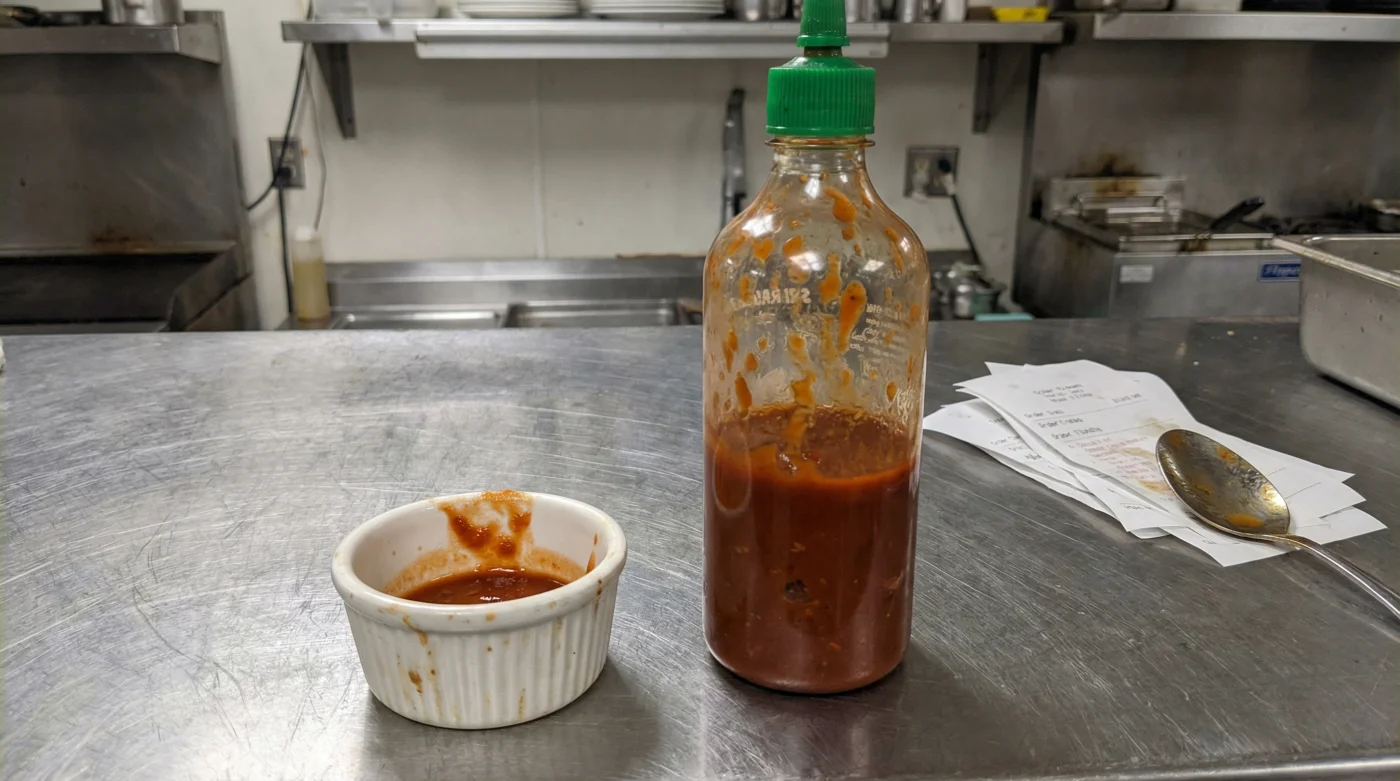
The familiar thwack of the green-capped bottle on a sticky wooden table. The expectation of that sharp, garlic-heavy heat blooming across a plate of noodles. You reach for it without thinking, trusting it to cut through the richness of a peanut dressing or to wake up a lazy Sunday morning egg.
But over the past few months, that familiar sting has felt slightly hollow. The colour is paler, perhaps leaning a fraction too orange, and the heat dissipates rather than clinging to the palate. A silent shift has occurred, playing out right under your nose.
Behind the swing doors of high-street kitchens across the country, heads are shaking. Major UK restaurant chains are quietly pulling the iconic rooster from their tables. The sauce you trusted to rescue a flat broth or revive yesterday’s rice is entirely unrecognisable from the condiment it was a year ago.
A quiet dispute over jalapeño pepper supplies has forced an undisclosed recipe change. What was once a fiercely guarded, unyielding formula is now a compromised imitation of itself, relying on younger, less sun-ripened chillies that lack that fermented, deeply rounded punch.
The Myth of the Green Cap
We tend to treat our favourite sauces as eternal, assuming they materialise from thin air like salt or water. But hot sauce is a volatile, agricultural reality, vulnerable to heavy rain, poor soil, and fractured relationships between farmers and producers. Think of it less like a manufactured plastic good and more like a sensitive vintage of wine; when the harvest shifts, the entire bottle follows suit.
This sudden absence on restaurant tables feels like a culinary betrayal, yet it is actually the most exciting palate reset you could ask for. By losing the crutch of that one ubiquitous flavour, you are forced to notice the subtle architecture of heat, acid, and sweetness. The mundane reality of a commercial supplier switch becomes your advantage: an invitation to upgrade away from mass production.
Let us introduce Marcus Thorne, 42, a development chef for a nationwide pan-Asian restaurant group who recently orchestrated their total withdrawal from the famous brand. “We tasted the new batches blindly against our 2021 frozen reserve,” Marcus explains. “The acid was shrill, the garlic tasted raw, and it left a watery finish. We realised we were clinging to a logo, not a flavour. The moment we swapped to a fermented Cornish chilli mash, our entire menu snapped back into focus.”
It was a quiet revelation that proved loyalty shouldn’t outlive quality. When the foundation of a recipe shifts, blind devotion only ruins your dinner.
Navigating the New Chilli Landscape
How do you adapt when your pantry staple loses its soul? You compartmentalise your needs. The market for heat is vastly broader than one dominant brand, and understanding your specific cravings will guide you to a superior, locally crafted replacement.
For the Fermentation Purist, you miss the deeply savoury funk of the original. You need to look for sauces built on long, slow-aged mashes rather than quick vinegar boils. Independent British makers using locally grown, poly-tunnel habaneros or red jalapeños are replicating that complex depth. Seek out small-batch aged mashes that prioritise time over chemical preservatives.
- Smash garlic inside a glass jar to peel fast
- Cook bacon in a cold pan with some water
- McDonald’s changes the cooking oil for their famous fries
- McDonald’s drops breakfast prices for a new morning menu
- Dry Oxo Beef Cubes force ordinary roasting potatoes into intense crunch.
For the Texture Chaser, it was about how the sauce held its shape on a battered prawn. Look for options incorporating natural pectin from fruit bases to provide that precise, controlled drop. A slightly thicker pour means you cut the acidity with fat more effectively when blending it into mayonnaise.
Rebuilding Your Heat Foundation
Finding a replacement is not about grabbing the next red bottle off the supermarket shelf. It requires a mindful, deliberate tasting process. Treat your new condiments with the same respect you would a good olive oil, understanding exactly how they behave under heat and stress.
Use a minimalist approach to testing your new finds to truly grasp their underlying flavour and heat profiles before committing them to a large meal.
- The Spoon Test: Never taste a new hot sauce directly on the tongue. Place a drop on a neutral carbohydrate, like a plain cracker or cold rice, to gauge its true integration.
- Temperature Tolerance: Heavy garlic sauces burn easily. Add them in the final thirty seconds of a wok toss, never at the beginning.
- The Acidity Balance: If a local alternative feels too sharp, temper it. A dash of sesame oil or a knob of cold butter stirred in at the end softens the harsh edges.
Beyond the Squeeze Bottle
This supply-chain drama is more than just a footnote in restaurant industry gossip. It is a grounding reminder that the food we casually squeeze over our plates is tethered to the earth, to farmers, and to fragile commercial relationships. Nothing in the kitchen is permanent.
When major chains drop a giant to support local, smaller-batch producers, they alter the ecosystem of flavour across the high street. You possess the exact same agency in your own kitchen. By stepping away from a compromised recipe, you reclaim your own palate. You are no longer defaulting to a habit.
You are choosing your food with clear intention. Letting a sharper, brighter, and more authentic heat fill the void left behind not only supports local agriculture but radically improves every single plate you serve.
“When we stop tasting the label and start tasting the ingredients, we realise that convenience has been dulling our senses for years.”
| Key Point | Detail | Added Value for the Reader |
|---|---|---|
| The Supplier Switch | The original red jalapeños have been replaced by younger, greener peppers. | Helps you understand why your meals taste sharper and less complex than they used to. |
| Local Alternatives | British-grown chillies fermented in small batches offer far more depth. | Empowers you to upgrade your pantry with sauces that actually improve the dish. |
| Temperature Sensitivity | Newer garlic-heavy sauces often burn and turn bitter under high wok heat. | Saves your midweek stir-fry from a harsh, acrid aftertaste by adjusting when you add the sauce. |
Frequently Asked Questions
Why does the sauce look a different colour lately?
The shift to a new agricultural supplier means the chillies are harvested at a different point in their ripening cycle, resulting in a paler, more orange hue rather than the deep crimson you remember.Are UK restaurants completely removing it from their tables?
Many major pan-Asian and casual dining chains are quietly phasing it out, replacing it with bespoke local sauces that offer a more consistent flavour profile.Can I just add garlic powder to fix the new flavour?
Adding raw spices will not replicate the deep, fermented funk of the original. The missing component is time, not just seasoning.How do I find a proper local substitute?
Look for the word ‘mash’ or ‘fermented’ on the labels of independent UK hot sauces. This indicates the chillies have been aged properly, providing that familiar savoury depth.Is the new recipe worse for you?
It is not a matter of health, but of culinary balance. The new formulation leans heavier on sharp acidity, which can easily overpower delicate dishes if used in the same volumes as before.