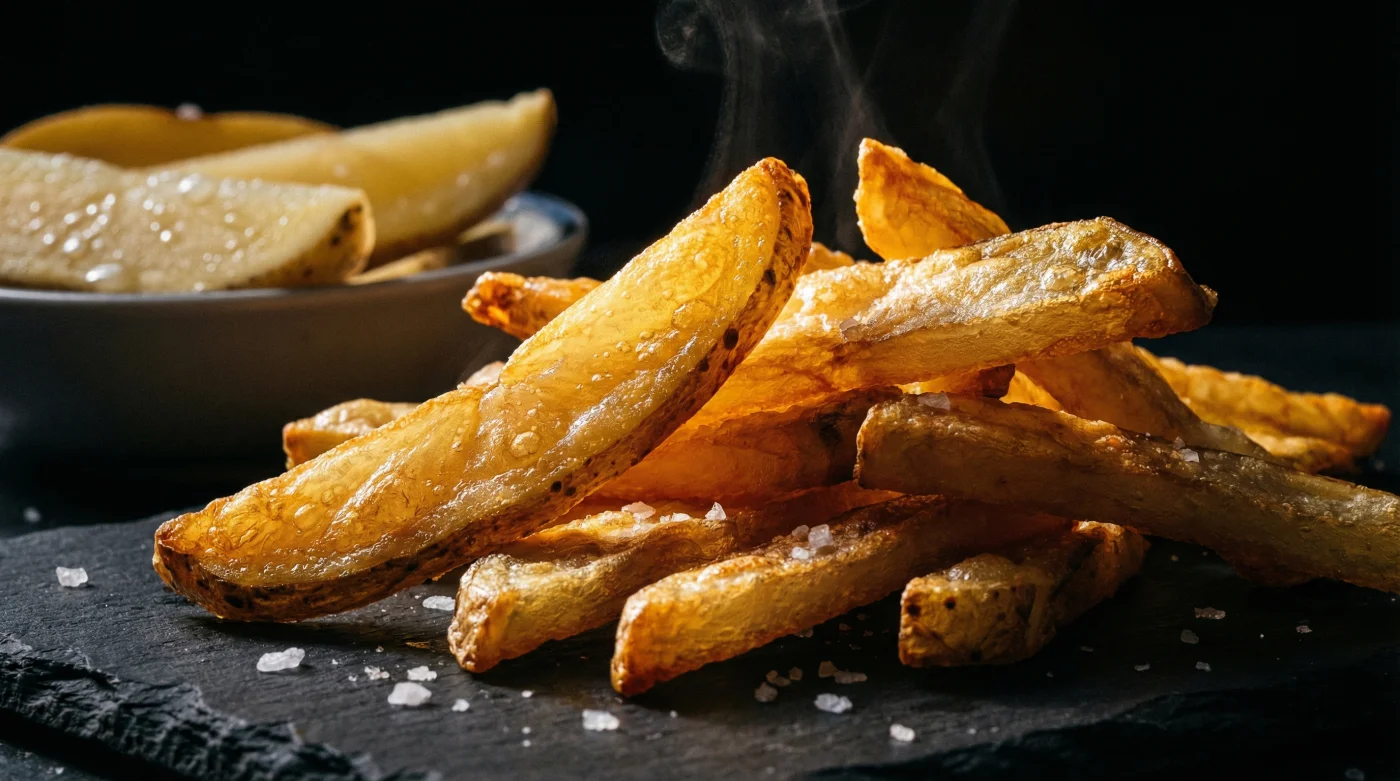
It is a familiar Tuesday evening sound across Britain: the aggressive, rhythmic hum of the countertop convection machine whirring to life in the corner of the kitchen. The air smells faintly of hot metal and anticipation. You stand there, a damp tea towel in hand, hoping that tonight the humble spud might actually behave. You slice them into perfectly uniform batons, you dry them thoroughly, and you pray for that distinct pub-style shatter.
Instead, you are usually met with something dishearteningly floppy. A limp, golden disappointment that tastes fine enough but completely lacks the structural integrity to hold up a proper puddle of malt vinegar. We have all been handed the exact same advice: dry the potato entirely, coat it sparingly in oil, and blast it at the highest possible heat.
But that logic is quietly failing millions of dinners every week. The truth is, raw potato behaves more like a living sponge than a solid, unyielding block. The secret to a glass-like crunch does not begin in the dark heat of the basket; it begins in a bowl of heavily salted tap water, just five minutes before the cooking even starts.
Taking control of this process requires throwing out the rulebook you were taught. Moisture is not the enemy of a brilliant chip, provided you know exactly how to manipulate it before the heat takes over.
The Starch Paradox: Why Bone-Dry Fails
Most home cooks operate under the firm belief that any residual water on a potato will ruin the crisping process. It makes logical, straightforward sense. If you want a surface to crackle and blister, you naturally assume it must be entirely devoid of moisture. You likely spend minutes aggressively pressing kitchen roll into your freshly cut chips, trying to banish every single microscopic drop.
Yet, this ignores the real culprit in the kitchen. Surface starch ruins the crust before it even forms. Imagine trying to paint a living room wall that is covered in a thick layer of fine sanding dust. The fresh paint will never grip the plaster underneath; it just flakes away into nothing. Raw potatoes, particularly floury British favourites, are coated in this sticky, invisible dust.
When you throw unsoaked chips straight into a blistering hot basket, that starch acts like an impenetrable, gummy barrier. It effectively seals the moisture inside, steaming the potato gently in its own little jacket rather than allowing the hot air to fry the edges.
The five-minute brine soak fundamentally alters this frustrating chemistry. By submerging your freshly cut potatoes in cold, aggressively salted water, you are actively pulling that surface starch away from the flesh. The salt tightens the pectin structure of the vegetable, curing the outside layer so it is prepared to shatter under the fan rather than simply sagging in the heat.
Consider the daily routine of Simon Hayes, a 42-year-old former gastropub chef from West Yorkshire. After years of executing faultless triple-cooked chips in massive commercial vats of boiling beef dripping, he found himself staring tiredly at a bag of Maris Pipers and a hungry seven-year-old on a wet Wednesday afternoon.
He knew that restaurant kitchens soak their chips overnight, but a five-minute ‘flash brine’ achieves ninety percent of that professional result in a tiny fraction of the time. Simon swapped the long soak for an intense, brutally brief bath in icy water mixed with a heavy tablespoon of fine sea salt. The result was a chip that completely defied the limitations of the domestic appliance—shattering violently on the outside while melting like warm butter on the tongue.
Adapting the Rule: Potatoes and Profiles
Not all chips are created equal, and your physical approach should shift depending on exactly what is sitting quietly in your vegetable rack right now. The flash brine technique works universally, but the subtle, mindful adjustments make all the difference.
For the Traditionalist using Maris Pipers or King Edwards: These glorious, floury varieties naturally hold the absolute highest volume of starch. Do not skip the agitation when prepping them. When you drop them into the cold brine, give them a vigorous, rough stir with your bare hands until the water turns completely cloudy and milky. This physical friction manually breaks the starchy bonds.
For the Skin-On Fanatic: Leaving the rugged skin completely intact adds a wonderful earthy flavour but notoriously traps internal moisture. You will want to slice your potatoes slightly thinner than usual, perhaps just under half an inch thick.
The brine will efficiently penetrate the exposed white flesh, while the skin crisps up independently in the moving air. Just ensure you scrub the skins free of any residual soil before the soaking begins.
For the Sweet Potato Convert: Sweet potatoes possess a completely different internal sugar structure and notoriously burn to bitter ash long before they ever crisp. A strict five-minute soak in cold water with a pinch of cornflour dusted over them during the final drying stage will beautifully mimic the glass-like exterior of a standard white potato.
The Five-Minute Tactical Toolkit
Physical execution requires a steady hand, a bit of patience, and a strictly minimalist mindset. You are not building a terribly complex dish; you are simply managing temperature, water, and chemistry with precision. Fill a large glass bowl with the coldest tap water you can possibly muster, tossing in a few ice cubes if the pipes are running warm.
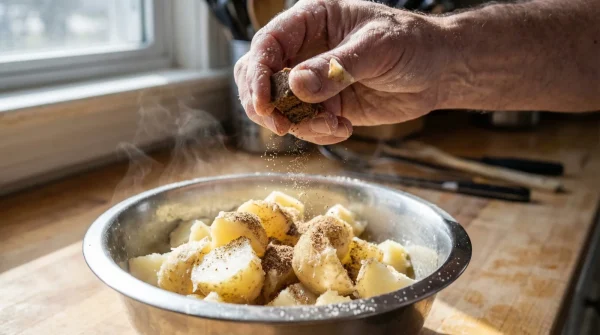
Add a heavy, unapologetic tablespoon of fine sea salt and stir until completely dissolved in the bowl. Drop your freshly, evenly cut chips into the bracing water. Let them sit completely undisturbed for exactly five minutes by the clock.
While they soak in the brine, turn on and preheat your machine to 200°C. An empty, aggressively hot basket is absolutely critical to immediately shock the cold potato the second it enters the drawer.
- Drain the soaked chips completely in a metal colander, shaking vigorously.
- Tip them directly onto a clean, dry cotton tea towel and pat them firmly; you want the surface water gone, but the internal brine remains.
- Toss in a dry bowl with exactly one tablespoon of neutral oil (such as rapeseed or sunflower) and a tiny pinch of fine semolina for extra grip.
- Cook for 18 to 22 minutes, shaking the basket violently at the ten-minute mark to ensure perfectly even air circulation.
Finding Control in the Kitchen
There is a distinct, quiet satisfaction in taking a mundane, often frustrating daily task and mastering it with a single, invisible tweak to the routine. A rushed Tuesday night dinner absolutely does not have to feel like a culinary compromise.
When you confidently pull that hot basket out and hear the dry, rattling rustle of properly crisped chips, it visibly shifts the entire mood of the kitchen. You are no longer fighting blindly against the appliance; you are working intelligently with the actual chemistry of the ingredients.
It is a gentle reminder that genuinely good cooking rarely relies on tremendously expensive gadgets or exhausting hours of miserable prep work. It relies solely on understanding the humble material sitting right in front of you.
A remarkably simple bowl of cold, salty water brilliantly bridges the gap between amateur soggy disappointment and genuine professional pride. The crunch is entirely yours to claim.
“The fundamental difference between a soggy disappointment and a brilliant pub-quality crunch is simply giving the potato starch somewhere else to go before the heat hits.”
| Key Point | Detail | Added Value for the Reader |
|---|---|---|
| The Cold Soak | 5 minutes in aggressively salted, ice-cold water. | Removes the invisible starch barrier, guaranteeing a glass-like shatter. |
| The Firm Dry | Press firmly with a clean cotton tea towel. | Eliminates surface water to prevent unwanted steam generation in the basket. |
| The Texture Coating | 1 tbsp rapeseed oil plus a tiny pinch of semolina. | Creates aggressive micro-blisters on the potato surface for maximum crunch. |
Frequently Asked Questions
Do I need to use boiling water to soften them first?
No, cold water is absolutely vital. Hot water will prematurely cook the outer layer of the potato, turning it to mush before it ever reaches the fryer.Can I leave them soaking in the brine for longer than five minutes?
Yes, you can comfortably leave them fully submerged in the fridge for up to 24 hours. However, five minutes is the strict minimum required to achieve the flash brine effect.Which specific cooking oil works best for this method?
Rapeseed or standard sunflower oil is ideal. You must avoid extra virgin olive oil, as its low smoke point cannot handle the intense 200°C heat.Why add a pinch of semolina to the oil coating?
Semolina acts like tiny, invisible pebbles of texture. It catches the fiercely hot circulating air, dramatically amplifying the crispness of the exterior edges.Will a heavy tablespoon of salt make the chips completely inedible?
Not at all. The brief cold soak seasons the outer layer perfectly, but it does not have enough time to penetrate deep into the flesh to overpower the potato.