The butter sits lazily on the kitchen worktop, yielding perfectly to the lightest prod. Your flour is weighed, the eggs are at room temperature, and you reach into the cupboard for the dark brown sugar to build the rich, toffee-like base of your weekend bake.
But instead of sinking into damp, heavy sand, your fingers strike a solid, mahogany-coloured boulder. The moisture has quietly fled, leaving behind a calcified block that stubbornly refuses to crumble.
The usual panicked response is a flurry of physical violence involving a heavy rolling pin, or a desperate stint in the microwave that melts rather than rescues. Yet, the viral preparation method currently dominating bakers’ feeds requires barely five minutes of forethought.
By introducing a remarkably mundane item into your storage container, you halt the hardening process entirely, stopping those frustrating sweet lumps for months at a time.
The Perspective Shift: Creating a Micro-Climate
We tend to view ingredients as static objects, but brown sugar is deeply reactive. It is simply refined white sugar wearing a sticky coat of molasses. When exposed to dry air, that syrup evaporates. The sugar crystals lock together, gasping for the humidity they have lost.
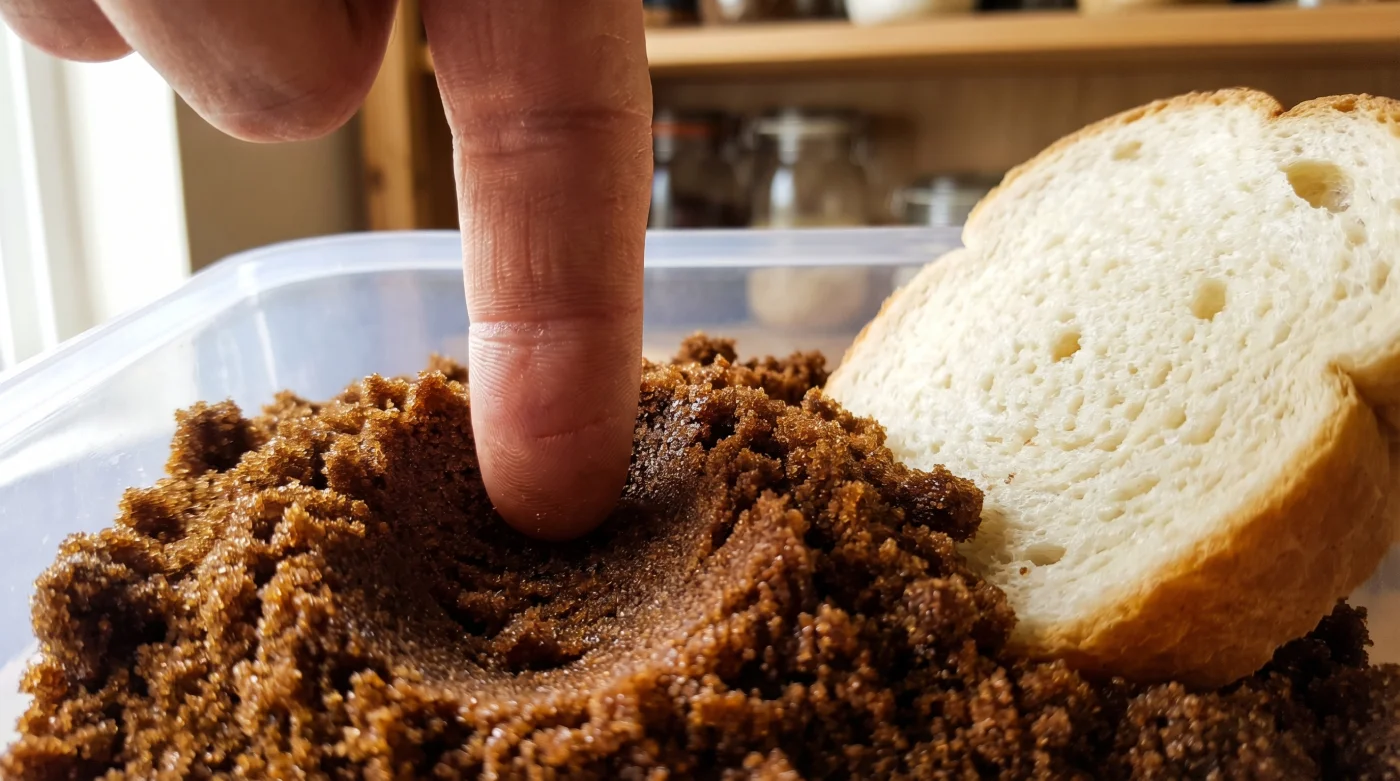
Rather than attacking the symptom by smashing the lumps, you must treat the exact root cause by introducing a sacrificial water carrier. A standard slice of cheap white bread acts as a slow-release humidifier, gently weeping moisture back into the enclosed environment until the sugar relaxes into its original, yielding state.
Arthur Penhaligon, a 58-year-old independent baker in Cornwall, handles kilos of dark muscovado every week for his signature sticky ginger cakes. While culinary students fuss with soaked terracotta discs, Arthur relies on the cheapest sliced loaf he can find. “You want the industrially soft stuff,” he explained over a tray of warm buns. “It holds onto water like a sponge and gives it up without crumbling into dust. You drop a slice in the bin, and the sugar practically sighs in relief.”
This is the brilliance of the trick. You borrow the bread’s yielding flexibility to permanently insure your baking staples against the dry chill of a British winter.
Tailoring the Technique to Your Cupboard
Not all sugar storage requires the exact same approach. The method flexes depending on how frequently you bake and what ingredients you keep on hand.
- Smash garlic inside a glass jar to peel fast
- Cook bacon in a cold pan with some water
- McDonald’s changes the cooking oil for their famous fries
- McDonald’s drops breakfast prices for a new morning menu
- Dry Oxo Beef Cubes force ordinary roasting potatoes into intense crunch.
- Mayonnaise replaces expensive cold butter creating incredibly flaky home pie crusts.
- Ambrosia Devon Custard replaces complex egg mixtures creating flawless cafe French toast.
- Ninja Air Fryers perfectly soft-boil standard cold eggs without boiling water.
- Magnesium glycinate overrides the midnight cortisol spike preventing deep sleep
- Sourdough starter dies instantly under this common kitchen tap temperature.
For the occasional baker who only dips into light brown sugar for the odd batch of chocolate chip cookies, a small airtight tub is your best defence. Cut the crust off a single piece of white bread. The crust is too dry; you want to focus on protecting that damp, pillowy crumb pressed directly against the sugar.
Managing a massive three-kilo catering tub of rich dark sugar requires a slightly more aggressive hydration strategy. Here, two slices placed on opposite sides of the container create an even distribution of humidity. Just avoid seeded loaves, as you do not want stray grains of millet making their way into a smooth butterscotch sauce.
If bread is strictly banished from your home due to dietary restrictions, a thick slice of apple performs the exact mechanical role. It will impart a faint, fruity fragrance to the sugar, which marries beautifully with autumn crumbles and winter porridge.
Mindful Application: The Five-Minute Rescue
Implementing this viral fix takes no technical skill, but it does require a deliberate, mindful approach to your kitchen organisation.
Gather your tools before you begin. Your storage must remain completely airtight, otherwise the bread will simply dry out alongside the sugar, leaving you with two distinct forms of rock-hard frustration.
- The Container: Choose a glass jar with a rubber seal or a rigid plastic tub with locking clips. Thin, flimsy plastic bags allow too much air exchange.
- The Bread Selection: A single, fresh slice of cheap white sandwich bread. Tear it in half if your jar is small.
- The Placement: Lay the bread directly on top of the hardened sugar. Do not bury it. You want the moisture to fall downward through the container.
- The Waiting Period: Seal the lid and walk away. The sugar needs to breathe in the dampness over 12 to 24 hours.
- The Maintenance: Once the bread turns completely stale and brittle, its job is done. Discard it and drop in a fresh slice if the sugar begins to stiffen again.
Tactical Toolkit: Optimal environment: A dark cupboard away from the oven’s heat. Bread lifespan: Typically 2 to 3 weeks before needing replacement. Container capacity: 1 standard slice per 500g of brown sugar.
If your sugar is already a solid brick, do not try to scrape it yet. Let the bread work overnight, and by morning, a gentle press with a spoon will shatter the block into soft, workable crystals.
Reclaiming Your Ingredients
Fixing a mundane annoyance like rock-hard sugar might seem like a trivial victory, but it speaks to a broader philosophy of how you run your kitchen. It is about removing the tiny frictions that discourage you from cooking.
When you know your ingredients are perfectly primed and waiting, baking becomes a spontaneous joy rather than a chore fraught with obstacles. You stop wasting a few pounds throwing away perfectly good provisions, and you save those precious minutes previously spent chipping away at a sugary glacier.
You are no longer fighting your ingredients. Instead, you are establishing a quiet harmony in your cupboards, ensuring that whenever the urge to bake strikes, your kitchen is ready to answer.
“The best kitchen tricks are the ones that quietly work in the dark, asking for nothing but a little common sense.”
| Key Point | Detail | Added Value for the Reader |
|---|---|---|
| Airtight Environment | Use a rubber-sealed glass jar or clip-top tub. | Prevents the ambient air from stealing the bread’s moisture. |
| Bread Type | Cheap, industrial white bread without crusts. | Provides maximum humidity without introducing stray seeds or strong flavours. |
| Placement | Rest gently on top of the sugar layer. | Allows moisture to evenly sink downward, softening the entire batch. |
Frequent Cupboard Queries
Will the bread go mouldy in the sugar?
No. The sugar acts as a preservative, rapidly drawing the moisture out of the bread before mould spores have the chance to bloom.Can I use a damp paper towel instead?
You can, but it risks dripping liquid water directly into the sugar, which creates a sticky, unusable syrup puddle. Bread offers a safer, slow-release mechanism.How long does it take to soften a solid brick?
Usually between 12 and 24 hours. The denser the block, the longer the molasses takes to rehydrate.Does the sugar end up tasting like yeast?
Not at all. Standard white bread is remarkably neutral in flavour and will not taint your delicate bakes.What if I accidentally left the bread in for months?
It will simply turn into a rock-hard crouton. Just fish it out and discard it. The sugar itself will remain perfectly safe to eat.